The Institute for Ecological Resilience (IER) at UH Energy has partnered with Harris County Precinct 4 in a major urban revitalization effort at Burnett Bayland Park. The collaboration brings together academic expertise and public infrastructure to enhance biodiversity and sustainability at one of the county’s key community spaces.
As part of the project, a highly specialized native seed mix will be planted in the park’s detention basins, areas which are used to temporarily store potentially damaging floodwaters. Jaime Gonzalez, Executive Director of IER, facilitated the donation of this premium, commercially valuable seed mix.
Harvested from the Aumann Prairie in La Marque, a “mother prairie” that represents one of the closest remaining examples of the Gulfton area’s historic natural habitat, the seeds will reintroduce localized genetic material into Burnett Bayland Park. The project seeks to preserve regional ecological heritage while strengthening the park’s resilience to flooding and drought.
The seed mix includes 66 species of native grasses and wildflowers selected for year-round activity and adaptability. Prominent species include Prairie Blazing Star, Rattlesnake Master, Narrow-leaf Sunflower, and multiple native bluestem grass species. As the mix has both spring and fall bloomers, the park will feature beautiful, changing colors across different seasons which are sure to delight visitors.
The next phase of the project will be the IER and Precinct 4’s P4Forward initiative
finalizing the seed donation. Site preparation is underway, with planting anticipated
by mid-June. 
“This is about restoring function and identity to the landscape,” said Matthew Abernathy, Program Director for the UH Coastal Center. “By using locally sourced, genetically appropriate native species, we’re improving biodiversity and resilience and we’re reconnecting this land to its ecological roots in a way that supports sustainability for years to come.”
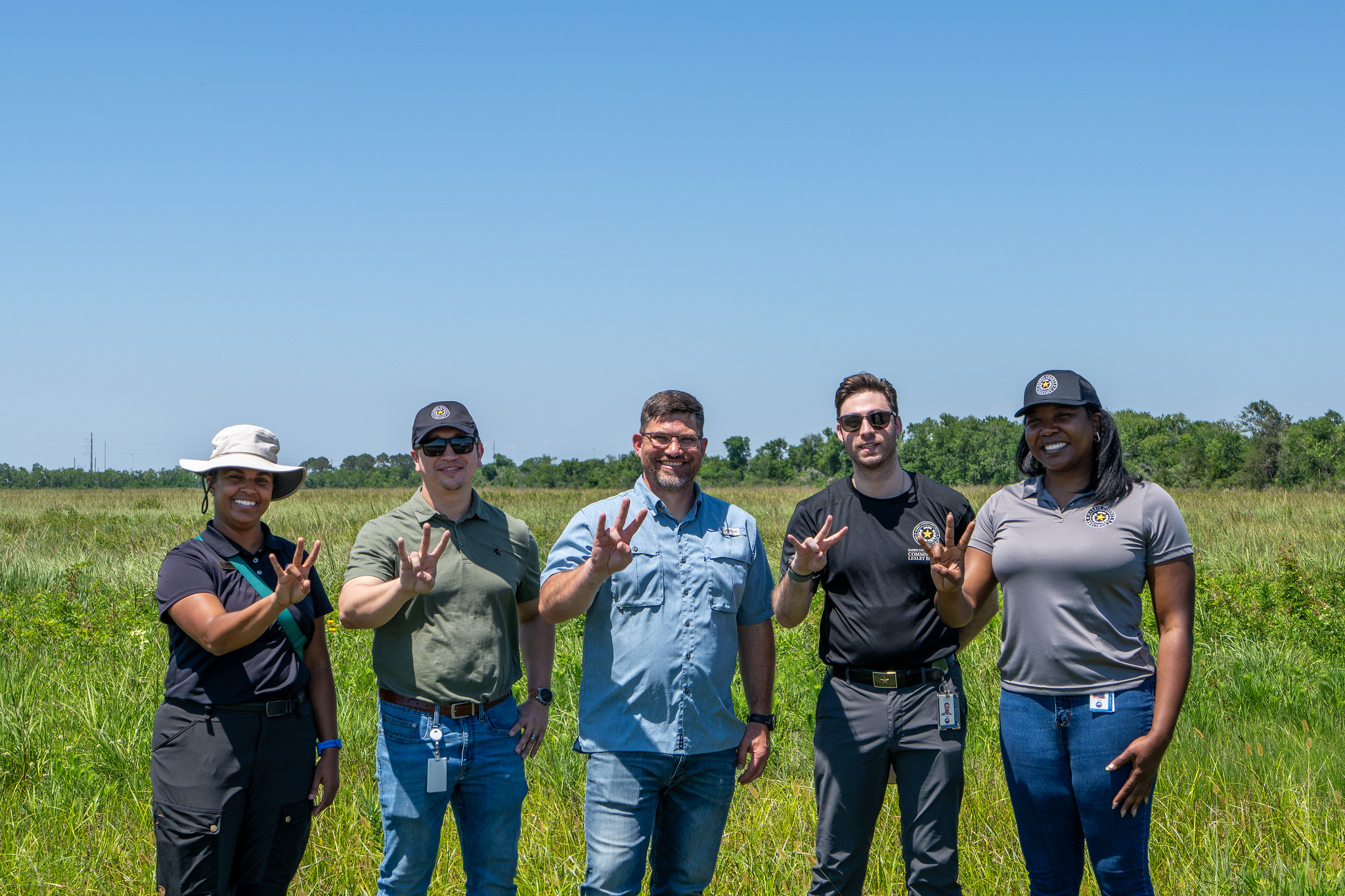
Abernathy recently hosted members of the Harris County Precinct 4 Signature Project and Operations teams at the Aumann Prairie research site, where they observed these species in their natural environment. The visit was a hands-on training opportunity for county staff, and provided them practical knowledge on long-term prairie management, including maintenance practices that will be critical as the planting matures through various growth stages.
In addition to ecological gains, the collaboration will mark a meaningful financial advantage for the county. By leveraging research-based resources and institutional partnerships, Harris County is gaining access to high-value ecological assets at no additional cost to taxpayers.
As Burnett Bayland Park begins its transformation, it will serve as a model for how cities can integrate ecological restoration into everyday infrastructure. The IER is proud to be at the forefront of creating healthier, more resilient urban spaces by bringing ecological expertise into public projects that demonstrate how nature-based solutions can ensure benefits for both communities and ecosystems.