The Energy Transition Institute (ETI) at UH Energy hosted the finale of Spring 2026 Coogs for Energy Hackathon on April 10–11, bringing together multidisciplinary student teams to tackle some of the most pressing real-world energy challenges today. The competition continued the same successful format as previous editions, emphasizing practical problem solving, industry engagement, and actionable, data-driven solutions.
This spring’s hackathon featured 10 teams, which had 60 participants from across the university, including engineering, business, data science, public policy, the social sciences, and the natural sciences, chosen after a rigorous selection process. Over the course of the competition, students worked to develop innovative strategies addressing topics ranging from improving natural gas quality and LNG exports to AI-driven power demand, community energy resilience, waste reduction, and climate adaptation.
The Spring 2026 Coogs for Energy Hackathon was generously supported through industry sponsorship from bp (main sponsor) and Arcadis (supporting sponsor). It also saw collaboration from additional industry, local government, and academic partners who provided problem statements and mentorship. This industry engagement is critical to the success of the Coogs for Energy Hackathons. By directly engaging with students on real business and technology challenges, problem statement providers and industry mentors help ETI create a pipeline of workforce-ready candidates equipped with practical experience, interdisciplinary collaboration skills, and exposure to workplace expectations.
“Experiences like this are essential for preparing students to step into the energy workforce with confidence,” said Debalina Sengupta, chief operating officer of the Energy Transition Institute. “The hackathon connects classroom learning with real energy challenges, while strong industry partnerships allow us to cultivate talent that is ready to contribute on day one. This kind of engagement is fundamental to ETI’s mission of accelerating the energy transition while developing the next generation of leaders.” Echoing Sengupta, Julian Beatty, a member of Team Cougar Energy, said, “I think the hackathon will encourage more students to pursue a career in energy and to try thinking more outside the box.”
This edition challenged teams to respond to the following 10 distinct problem statements, each grounded in real operational and environmental contexts.
- Aligning Permian Basin gas quality with LNG export specifications
- Decarbonizing large public-sector vehicle fleets through data-driven approaches
- Optimizing energy use in Southeast Asian oil, gas, and heavy industry assets
- Powering the rapid growth of AI and data centers while maintaining grid resilience
- Advancing remote operations for decentralized energy systems
- Evaluating geo-engineering and climate adaptation technologies
- Mitigating extreme heat from Houston’s parking lots and sidewalks
- Building decentralized energy solutions for community resilience
- Reducing construction and demolition waste through energy-efficient strategies
- Improving plastic waste collection systems to support circular economy goals
Each team had 10 days to work on solutions to their chosen problem statements and was paired with industry and academic mentors—from bp, Arcadis, Tricon Energy, TXU Energy, Greentown Labs, and the University of Houston—who provided technical guidance, industry insight, and feedback throughout the competition.
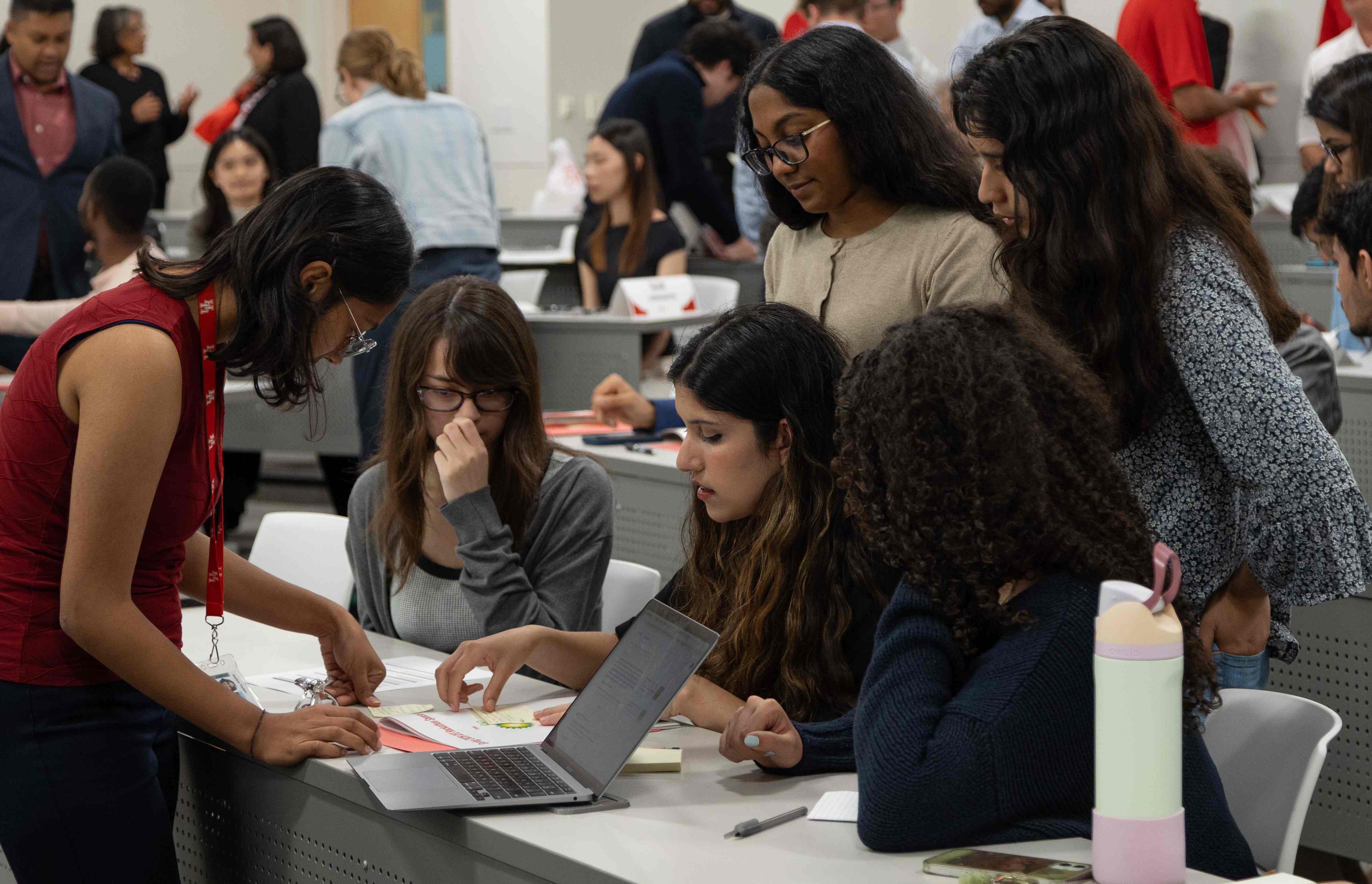 Team Energized at work on Day 1 of the Hackathon
Students applied analytical tools, technical expertise, and creative thinking to design practical and scalable solutions. Teams explored advanced analytics, artificial intelligence, policy frameworks, infrastructure design, and human-centered approaches to address their problem statements. Andrea Rivera, from Team Energized, summed up her experience thus: “Working on the problem statement has allowed me to think creatively. I appreciate being given free rein to come up with a solution with a group, as it allows me to practice my communication and entrepreneurial skills. Researching with a team allowed us to critique and build on the ideas of others.”
The two‑day finale began on the evening of Friday, April 10, when each team presented three early‑stage ideas as solutions to their problem statements by applying a design decision matrix and then received live critique from the mentors. By the afternoon on Saturday, April 11, teams had advanced their concepts into digital or physical prototypes, completed comprehensive documentation, and delivered their final presentations to a judging panel. On the panel were Gus Eghneim, SVP compliance sustainability and chief compliance officer at Proenergy; Marco Caccavale, founder and principal of Energy Equipment Advisors LLC; and Ramachandra Shenoy, CEO of RBR Group.
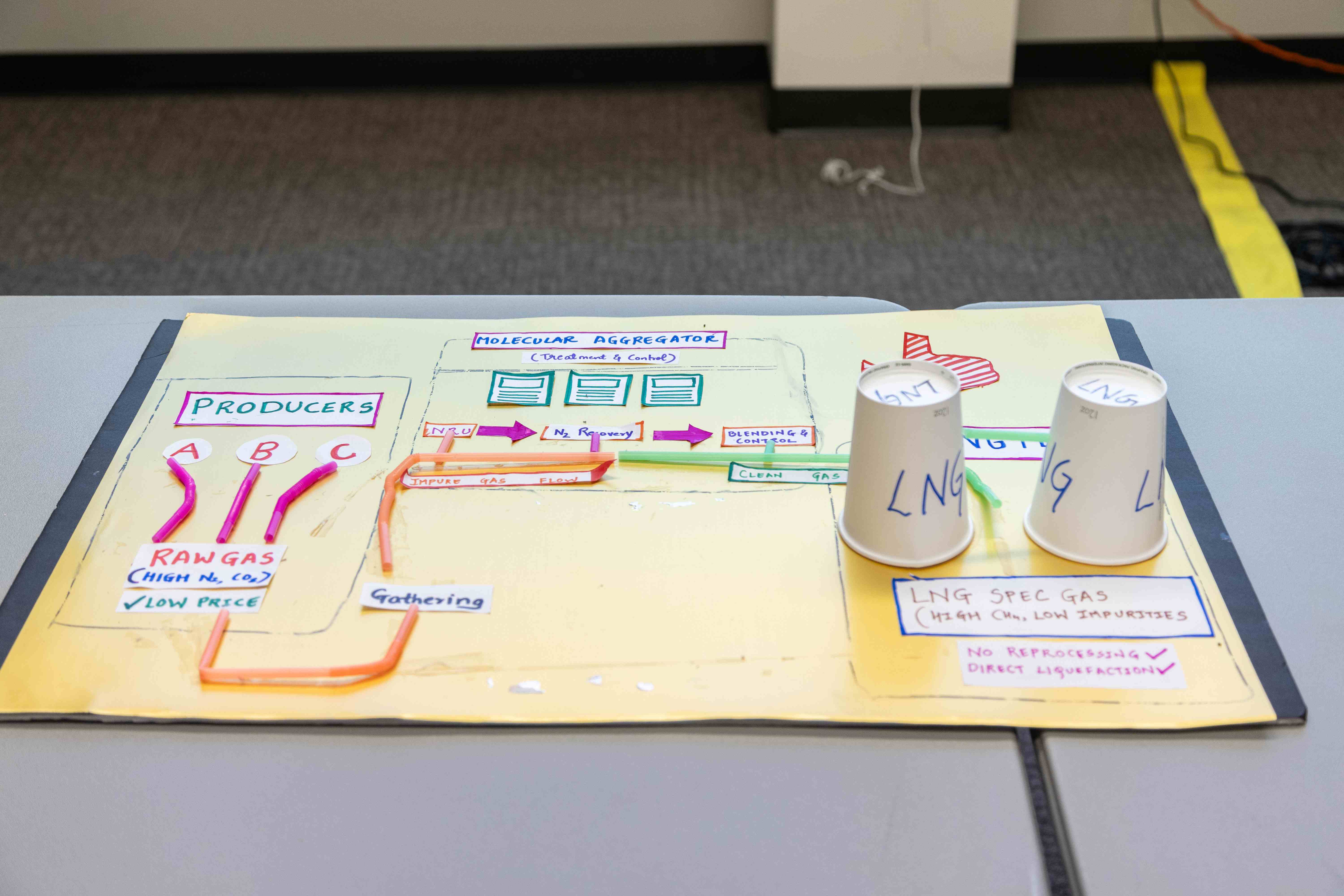 Physical prototype built by Team Pulse Grid for their work on the challenge statement
"Aligning Permian Basin Gas Quality with LNG Export Specifications"
Physical prototype built by Team Pulse Grid for their work on the challenge statement
"Aligning Permian Basin Gas Quality with LNG Export Specifications"
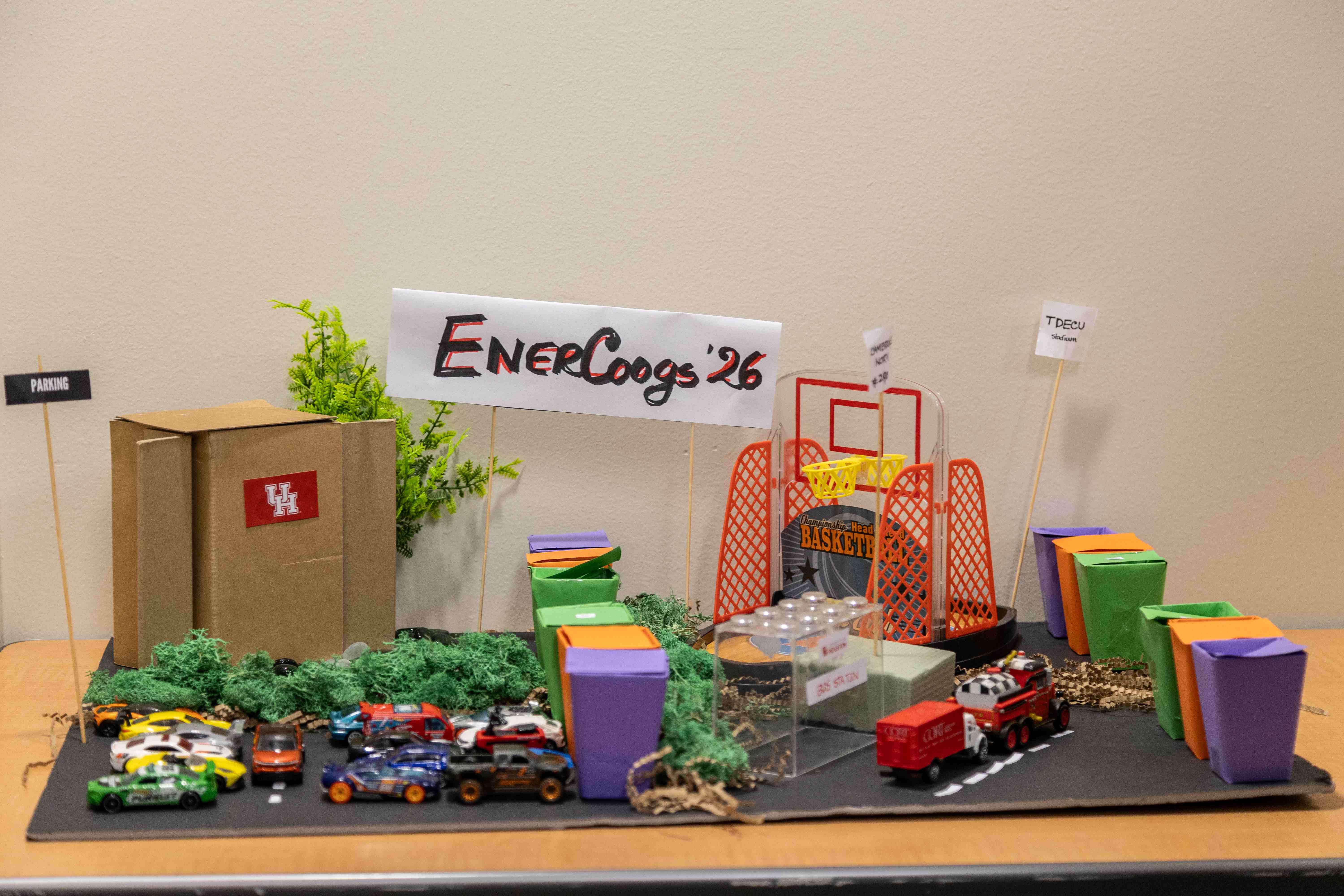 Physical prototype built by Team EnerCoogs 26 for their work on the challenge statement
"Improving Plastic Waste Collection Systems to Increase Recovery and Reduce Leakage"
Physical prototype built by Team EnerCoogs 26 for their work on the challenge statement
"Improving Plastic Waste Collection Systems to Increase Recovery and Reduce Leakage"
Presentations were evaluated based on technical rigor, feasibility, innovation, scalability, and clarity of communication.
The Spring 2026 Coogs for Energy Hackathon winning teams were:
- Team Pulse Grid were declared the winners. They worked on the problem statement “Aligning Permian Basin Gas Quality with LNG Export Specifications” assigned by bp.
- Team Energized earned second place. Their challenge statement was “Reducing Construction and Demolition Waste Through Energy‑Efficient Strategies and Resilient Reuse in Houston”, assigned by Tricon Energy.
- In third place was Team Energy Compute. Their problem statement was assigned by the Houston Galveston Area Council and was “Decentralized and Distributed Energy Solutions for Community Resilience.”
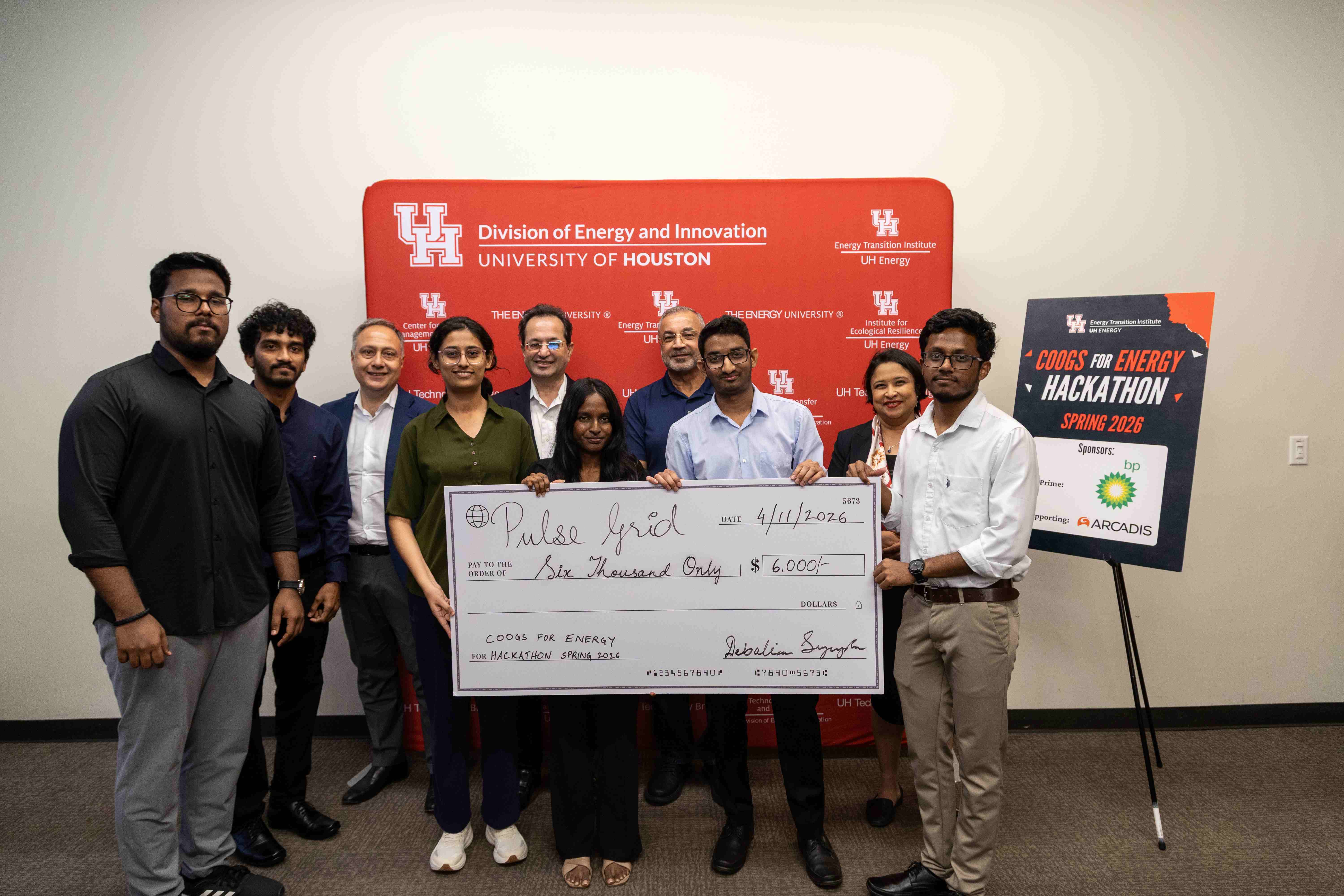
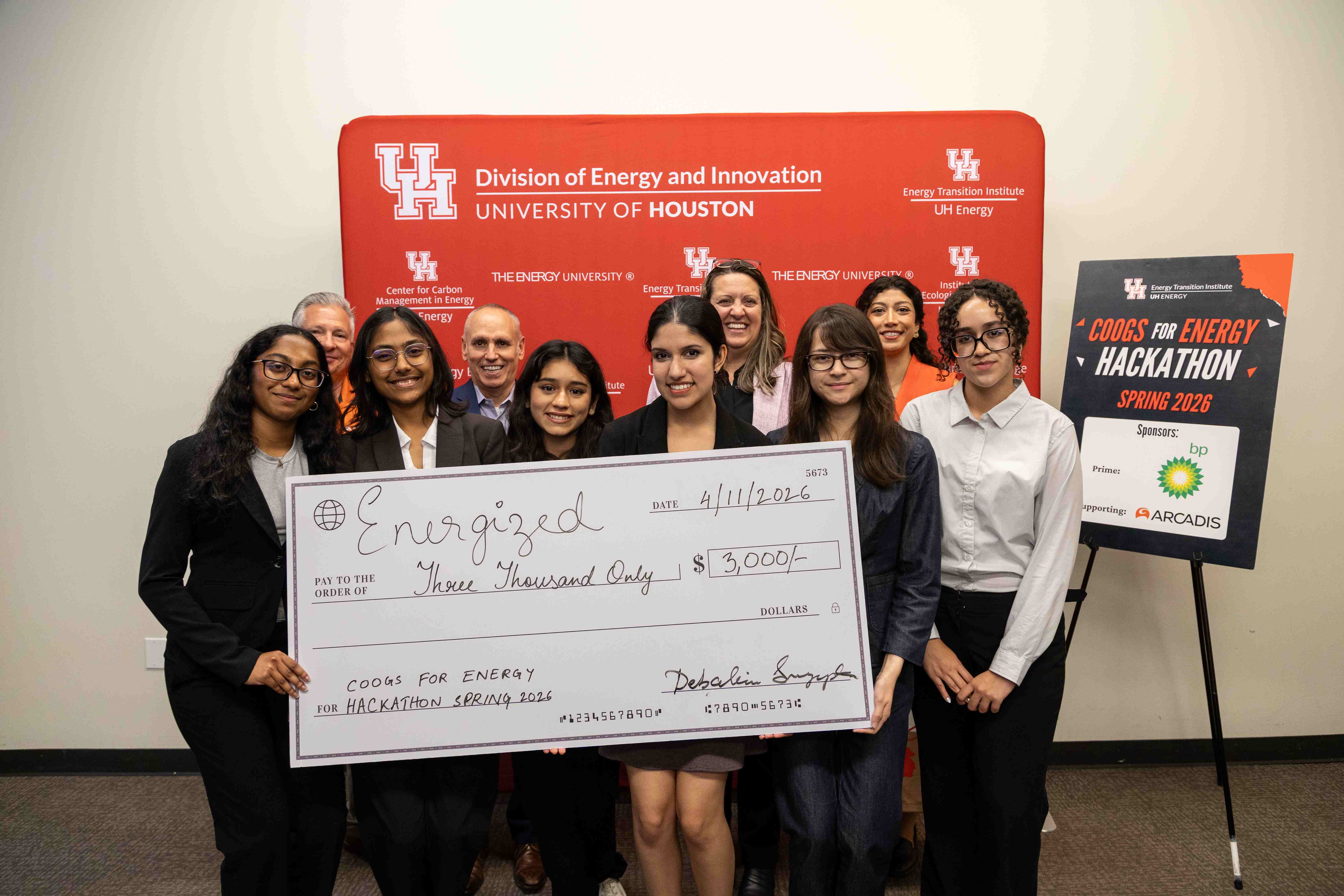
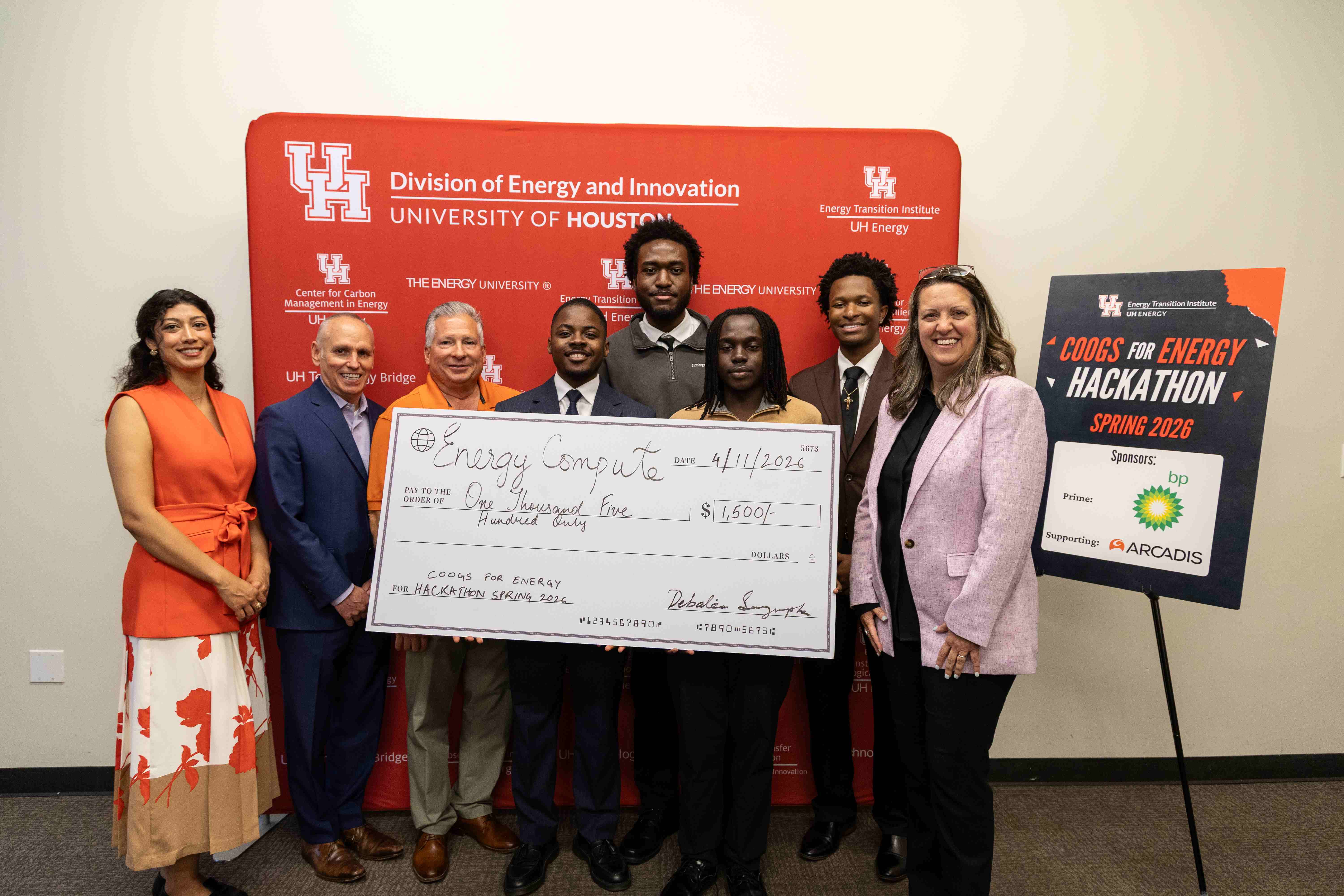 The Three Winning Teams: Pulse Grid (winners); Energized (first runners-up); Energy
Compute (second runners-up)
The Three Winning Teams: Pulse Grid (winners); Energized (first runners-up); Energy
Compute (second runners-up)
Three Mentor’s Choice Awards were also announced.
- Team Carbonauts was awarded the Mentor’s Choice Award for Due Diligence for their work on the problem statement “Mitigating Extreme Heat from Concrete Parking Lots and Sidewalks in Houston” provided by Tricon Energy.
- Team Power Six won the Mentor’s Choice Award for Best Technical Solution; they worked on the challenge statement “Develop a Decision-Support System for NPV-Positive Energy Optimization in SE Asian Oil & Gas and Heavy Industry” provided by Honeywell Process Automation.
- Team Energix received the Mentor’s Choice Award for Complete Prototype working on the problem statement “Powering the AI Boom: Designing a Smarter Energy Future” provided by Arcadis.
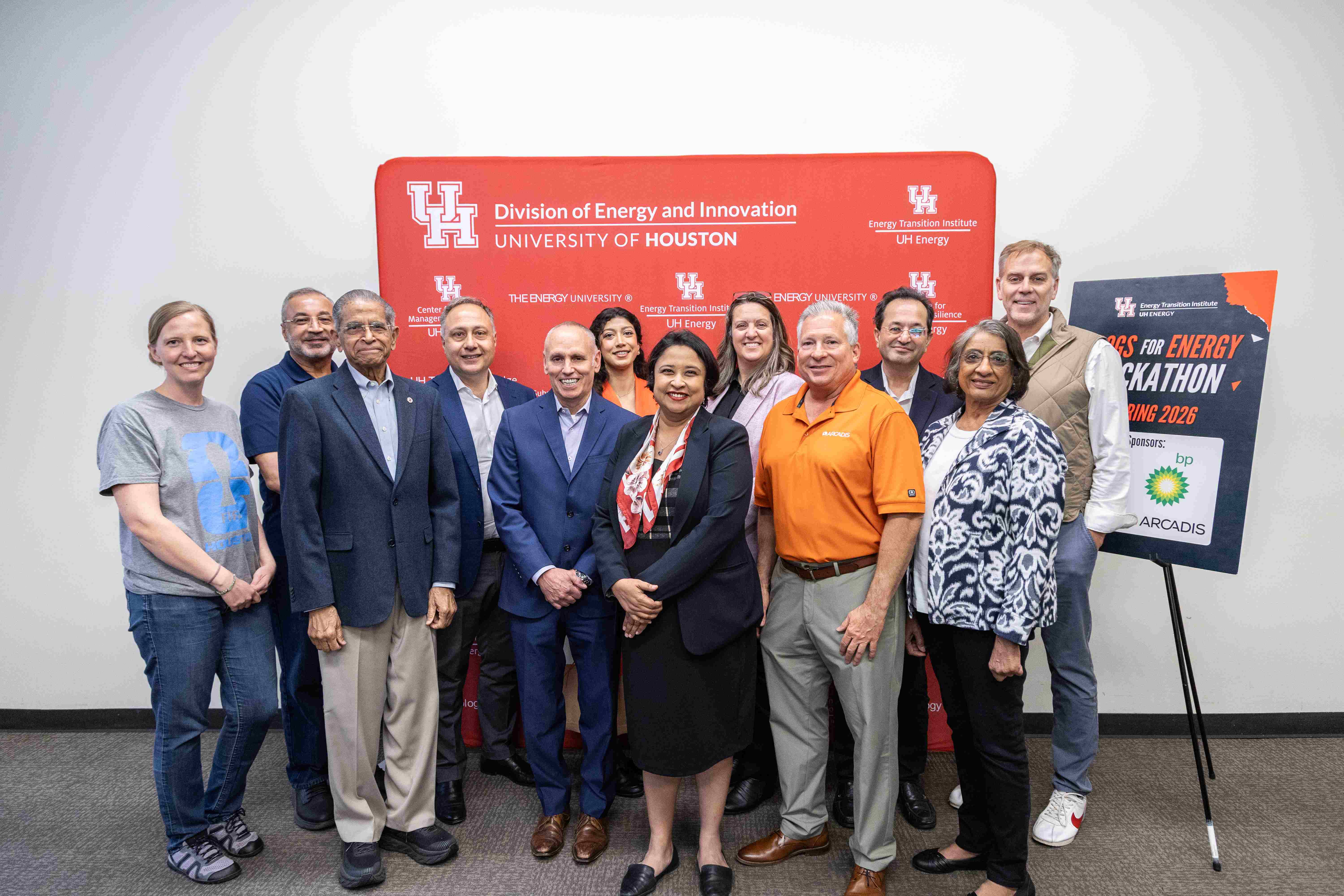
The Spring 2026 Coogs for Energy Hackathon Mentors
The Spring 2026 Coogs for Energy Hackathon brought opportunities of hands-on problem solving and mentorship for students. The competition continues to be an invaluable platform for connecting students with industry and advancing solutions for the global energy transition.