2026 Perspectives


August 25, 2026
As U.S. Electricity Demand Rises, How Can the Grid Keep Up? Insights from Texas
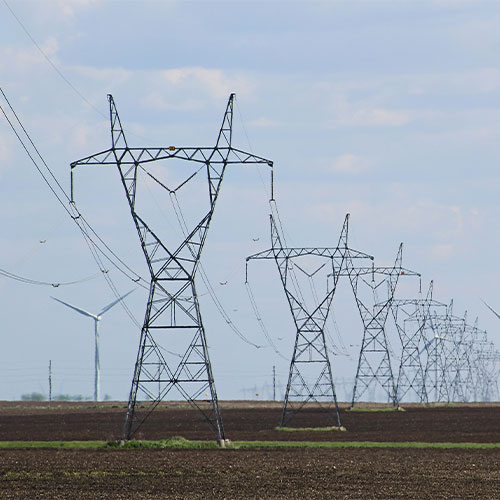
The United States is going through a fundamental shift in how electricity is produced, delivered and consumed in the country. At the same time, rapid data center development and industrial growth and electrification are pushing electricity demand up at a time when the existing national power system is already under pressure.
July 24, 2026
Future of the Electric Grid and the Growth of Large Loads in Texas
The Texas grid has long served large industrial loads like refineries, petrochemical facilities, manufacturing plants, ports, LNG terminals, and other energy-intensive industries. What is different about the ongoing, unprecedented development of data centers and hyperscalers in the state is the scale, speed, and geographical concentration of the projected electricity and resource demand. Data centers are emerging in clusters, seeking significant power, and doing so on timelines that are much faster than the timelines required to typically build the generation, transmission, natural gas delivery infrastructure, and water systems required to serve them.

June 8, 2026
What is Driving Our Increasing Electricity Bills: Is it Market Structure, Fuel Costs, or Grid Infrastructure?
Residential electricity prices have increased by about 30% over the last five years across the United States, outpacing inflation. This raises the question of what is driving this increase? Is it changes in fuel costs, differences in market structures across the country, weatherization investments for an aging grid, or new large loads like data centers and AI hubs? We focus on the first two in this Perspective.

June 3, 2026
Who Bears the Burden? The Socioeconomic Determinants of Household Energy Insecurity
The new Residential Energy Consumption Survey’s (RECS) finding that one in three American households experienced energy insecurity in 2024 is striking on its own. However, the national average hides the more important and unsurprising story: energy insecurity is not randomly distributed. It is concentrated where income, housing, race, geography, and limited access to energy assistance already leave households with the least margin.

June 1, 2026
Where is Energy Insecurity Concentrated in the United States?
New data from the Energy Information Administration's Residential Energy Consumption Survey highlights that one in three American households could not reliably afford electricity in 2024. Household energy insecurity is best understood not only through difficulty in paying electricity bills, but also through the tradeoffs households are forced to make. For some, these tradeoffs to keep the lights on range from choosing not to keep their homes at a safe temperature to foregoing food and medicines to pay their electricity bill. In 2024, almost 44 million households reported experiencing at least some form of energy insecurity, while 33 million reduced or went without food or medicine to cover their electricity bills.

April 23, 2026
Climate Tort Litigation Finally Reaches the Supreme Court — Again
On February 23, 2026, the U.S. Supreme Court granted certiorari in Suncor Energy Inc. v. County Commissioners of Boulder County. This case poses a sweeping question arising from literally decades of litigation: does federal law preclude state-law claims that seek relief for injuries allegedly caused by the global climate effects of interstate and international greenhouse gas emissions? A ruling on the merits could reshape or even eliminate dozens of pending climate tort lawsuits filed by cities, counties, and states across the country. But then the Court surprised observers by adding a second question of its own: whether it even has jurisdiction to hear the case at all.

March 12, 2026
Speed-to-Power: Solving the Infrastructure Mismatch for Texas’s AI Boom
Texas is witnessing an unprecedented growth in the number of massive AI-driven data centers across the state. So much so that according to recent reports, Texas is set to become the data center capital of the world by 2030. Across the state, data centers are being planned and constructed at extraordinary speed, often in as little as 18 to 24 months. Accompanying that is the race to get them connected to the existing power grid: by late 2025 ERCOT received 230 gigawatts of large-load interconnection requests, driven mainly by data centers.
February 27, 2026
The Grid Had Many Winners During January’s Winter Weather Event, but This Was Not an Extreme Stress Test
The Texas electric grid withstood the late-January cold spell without any major disruption. Relief around not experiencing a repeat of the February 2021 winter storm Uri was followed by a familiar narrative: speculating on what saved the system. Some declared grid-scale batteries as the winner, while others picked natural gas, or baseload coal and nuclear. However, the data point to a more nuanced reality.

February 24, 2026
Winter Storm Uri, Five Years Later: Why Texans Who Suffered Most Now Trust the System Least
Five years ago this month, Winter Storm Uri killed 246 Texans and caused up to $195 billion in damage. For days in February 2021, 4.5 million homes lost power as temperatures plunged. As we mark this grim anniversary, Texas's grid remains vulnerable, and the fundamental reforms needed to ensure reliability have stalled.

February 17, 2026
Our Approach to Plastic Waste is Broken. How Do We Fix It?
Imagine grabbing a bottle of water before a flight from California to Washington. You finish it mid-air, recycle it when you land, and assume it will enter a familiar recycling system. But in the United States, that is rarely the case. The fate of the plastic bottle, whether it becomes a new one, ends up in a landfill, or is incinerated, depends entirely on where your plane lands.

February 16, 2026
A New Chapter for Geothermal Energy and Texas’s Chance to Lead Energy Innovation
When it comes to energy, Texas has seen it all: from being at the forefront of the conventional and then unconventional oil and gas eras to leading the nation in wind and now solar deployment. Now, as U.S. electricity demand begins to grow again driven by new energy-intensive industries like data centers as well as electrification of industry, buildings, and transportation, Texas is poised to lead one of the next big development in the energy transition—advanced geothermal energy.