Multiscale Exploration of Critical Minerals: Integrated Hyperspectral Remote Sensing and Geochemistry
01/27/2026
0h 47m 02s
Overview
This lecture presents research from the Geospatial and Remote Sensing Research Laboratory
in the Department of Earth and Atmospheric Sciences, focusing on the exploration of
critical minerals using remote sensing technologies. Drawing from multiple PhD and
MSc dissertations, peer-reviewed publications, and federally funded projects, the
work demonstrates how hyperspectral imaging—combined with geochemical and geophysical
methods—can be used to identify and characterize economically and strategically important
mineral resources.
The talk introduces the concept of critical minerals, their global distribution in relation to plate tectonics, and the geological environments in which they form. It then highlights modern mineral exploration workflows, emphasizing the growing role of hyperspectral remote sensing from laboratory scale to drones, airborne platforms, and satellites. Case studies spanning gold, copper, and rare earth elements illustrate how these techniques are applied in real-world mining and exploration contexts.
Expert Insights & Key Takeaways
Critical minerals are geologically predictable but strategically vulnerable
Their global distribution is closely tied to tectonic settings such as subduction
zones, rift environments, cratonic regions, and hotspots. Supply disruptions pose
serious economic and national security risks.
Hyperspectral imaging is a powerful exploration tool
By capturing diagnostic absorption features of minerals, hyperspectral data enables
the mapping of alteration zones, mineral assemblages, and geochemical proxies that
are closely associated with ore formation.
Gold mineralization is best detected indirectly
Gold itself lacks a unique spectral signature, but its presence can be inferred through
associated minerals such as clays, iron oxides, galena, and sulfides. Hyperspectral
imaging successfully revealed mineralogical and stratigraphic controls on gold deposition
in Carlin-type systems and hydrothermal vein environments.
Porphyry copper systems show systematic spectral zonation
Distinct alteration halos (potassic, phyllic, propylitic) were mapped at large-scale
operations like Bingham Canyon, demonstrating how hyperspectral imaging can support
mine-scale geological interpretation and operational decision-making.
Rare earth elements can be detected remotely
Rare earths—particularly neodymium—exhibit characteristic absorption features that
allow detection at concentrations as low as ~200 ppm. A newly developed spectral metric
(the “Bastnäsite Index”) was validated through laboratory analysis, drone surveys,
airborne sensors, and multiple satellite platforms.
Remote sensing can identify both known and unknown anomalies
Beyond active mines, hyperspectral data revealed legacy contamination and previously
unrecognized rare earth anomalies, highlighting its value for environmental monitoring
and greenfield exploration.
Integration is key
Combining hyperspectral imaging with geochemistry, geophysics, LiDAR, and machine
learning significantly enhances mineral exploration effectiveness.
Future Outlook
The research points toward a future where mineral exploration is increasingly data-driven,
remote, and integrated. Continued advances in satellite-based hyperspectral sensors,
higher spatial resolution, and improved signal-to-noise ratios will further expand
the capability to detect critical minerals from space.
Ongoing work aims to refine detection limits, extend methodologies to secondary resources such as coal and fly ash, and integrate hyperspectral data with AI-driven analytics and geophysical datasets. These approaches have the potential to accelerate discovery, reduce exploration risk, and support sustainable development of critical mineral resources essential for energy transition and advanced technologies.
Guest Speaker
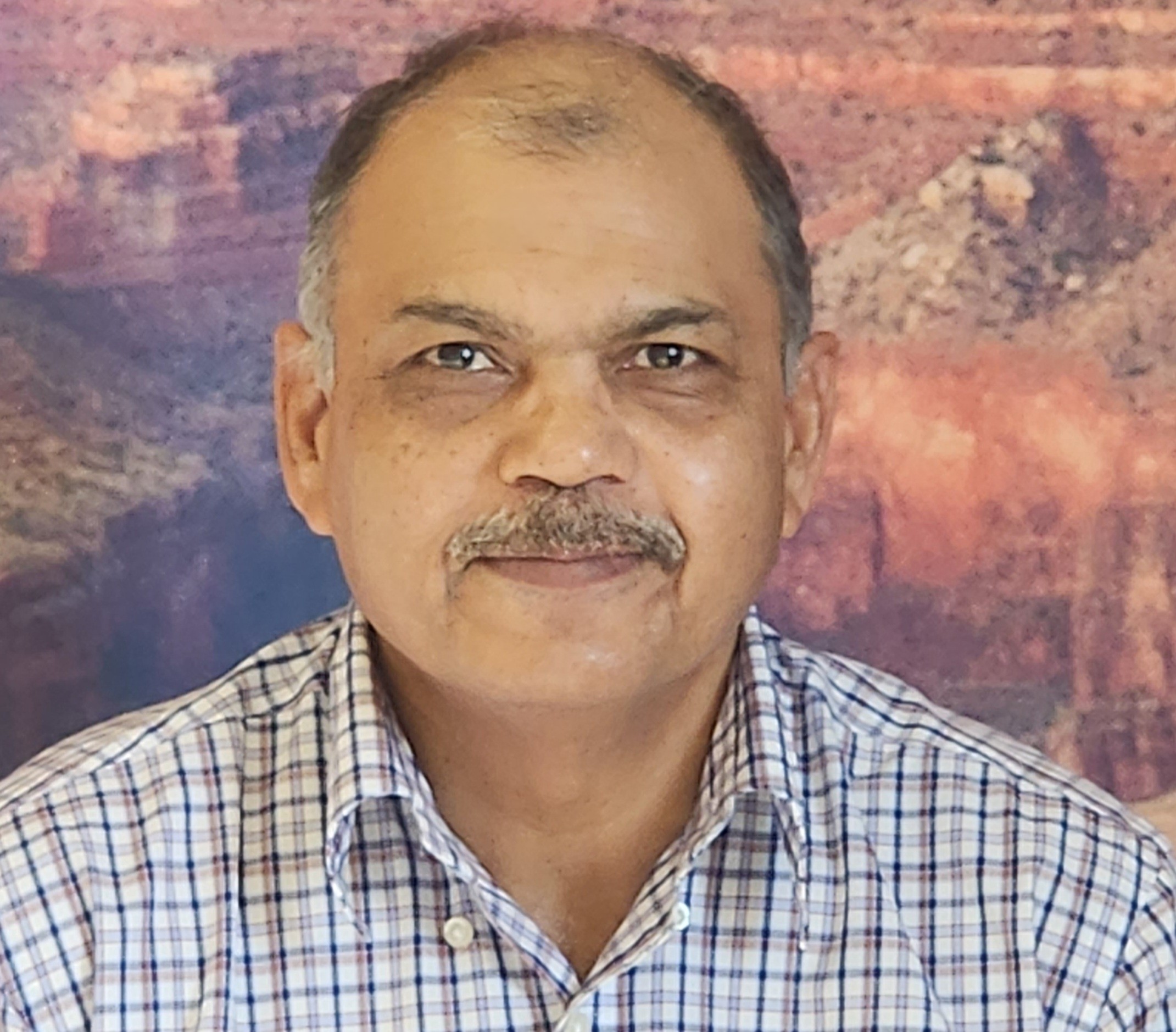
Shuhab Khan
Graduate Advisor (Geology and Geophysics), Professor of Geology (Tectonics, Geological Remote Sensing)
Department of Earth and Atmospheric Science