100 Years of Excellence
Explore key milestones from the past 100 years that have shaped the University of Houston—from its founding to the moments that define UH today.
1927-1939
Built by Community, for Community

Established on March 7, 1927, Houston Junior College was founded to provide higher education opportunities for working Houstonians. With humble beginnings in San Jacinto High School and local churches, 461 students enrolled by the first fall.

The Cougar designated as the official college mascot, representing courage and tenacity.
-
The Daily Cougar student newspaper begins.
-
Due to continued enrollment growth, the four-year University of Houston is established, enrolling 909 students in its three colleges of arts and sciences, community service and the general college.

Thanks to the philanthropy of Ben Taub and the J.J. Settegast Estate, the University of Houston secured its 110-acre home, and Hugh Roy Cullen funded its first building.

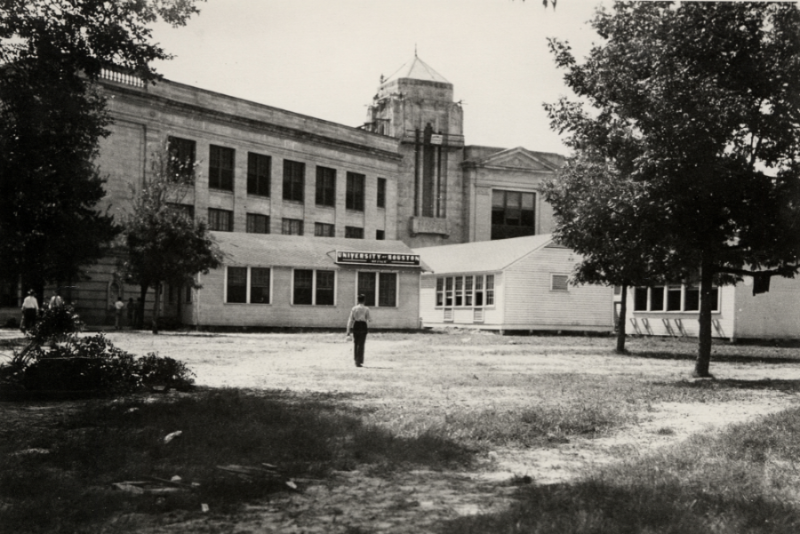
UH opens the Roy Gustav Cullen building, which was the first air-conditioned building on a U.S. campus and introduces graduate classes.
-
Despite the Great Depression, the institution flourished due to the demand for accessible higher education and strong leadership from its first President Edison E. Oberholtzer.

Fall Enrollment
2,700 students
1940-1949
Putting Down Roots

The student-led carnival Frontier Fiesta begins. In later years, Frontier Fiesta would attract upward of 100,000 people to the UH campus, leading Life Magazine to call it the “Greatest College Show on Earth.”

During WWII, UH adapts programs to support defense efforts. The U.S. Navy Reserve Vocational School began training sailors at UH in 1941 and the U.S. Navy Electricity and Radio Material School (NERMS) opened in the newly built UH recreation building in 1942.
-
The harmony class composes the University’s alma mater.

Through legislation (Texas Senate Bill 207), UH separates from HISD; establishes first Board of Regents led by Hugh Roy Cullen.

A crowd of 11,000 fans arrive to watch UH’s first football game.

The first live UH Cougar mascot arrives on campus; students name the cougar Shasta.

UH Frontiersmen group organized to promote Cougar spirit, helping with Frontier Fiesta and homecoming and serving as campus ambassadors.
-
By the decade’s end, an architecture program and the schools of pharmacy, law, engineering, education, arts and science, and business were established.

Fall Enrollment
13,600 students
1950-1959
The Momentum Years

UH opens the Ezekiel W. Cullen Building, housing 46 classrooms. The M.D. Anderson Library opens, and the University’s public broadcasting radio station, KUHF-FM, went on air.

The UH football team competes in its first bowl game, the Salad Bowl, in Phoenix and defeats Dayton 26-21.

UH College of Optometry opens, marking a major milestone in optometric education in Texas as it was the first optometry school in the state and the 10th in the nation.
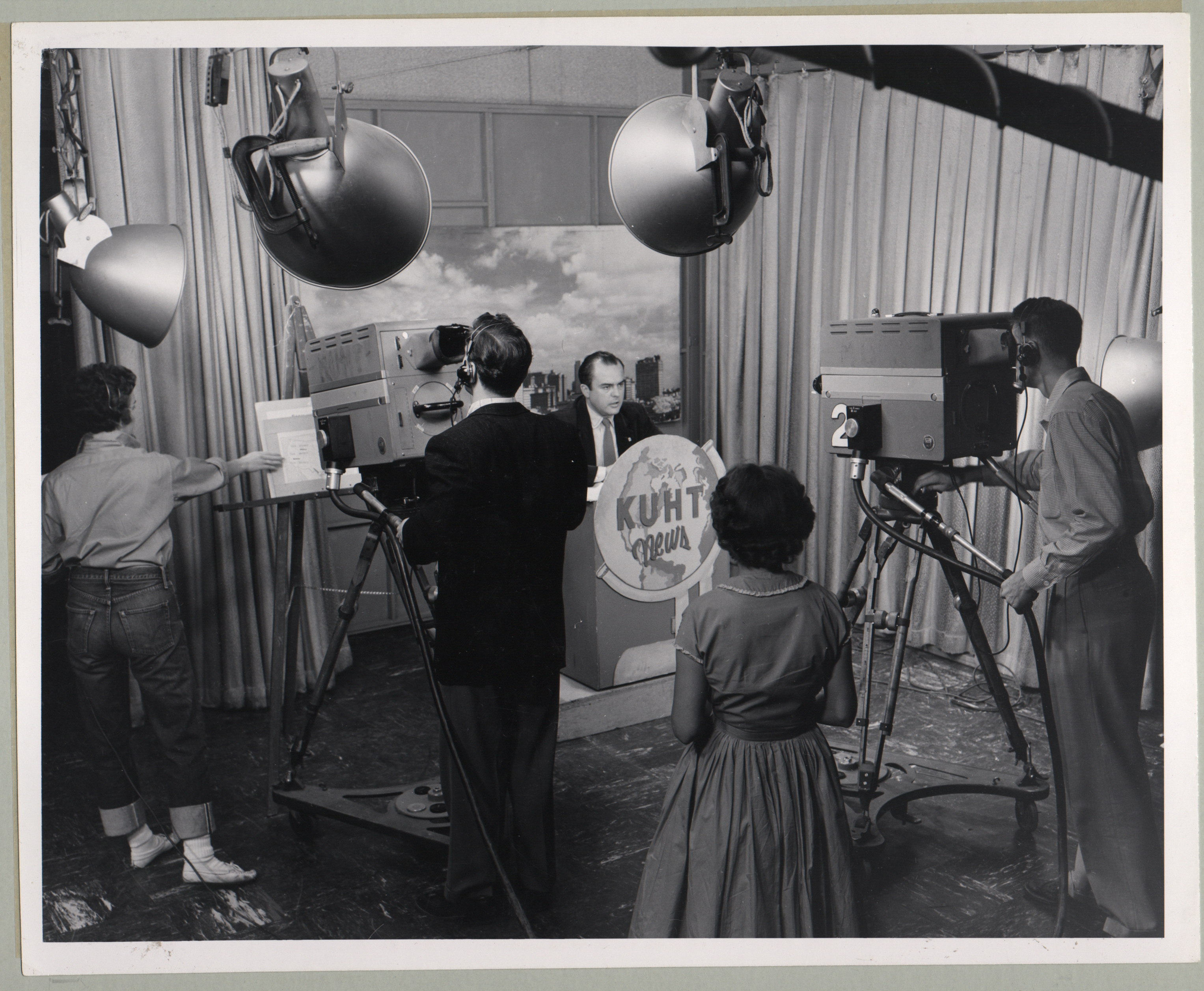
After obtaining a television license, UH launches KUHT-TV as the first educational television station in the U.S.

The UH “Cougar Sign” is established after Shasta I loses a toe in route to UH’s first football matchup against the University of Texas. UT fans mocked UH by holding up hand signs with bent ring fingers to imitate the injury, a gesture UH students later adopted as a symbol of pride.
-
UH earns full accreditation by the Southern Association of Colleges and Schools and elevated academic standards by raising admission requirements and prioritizing doctoral faculty and scholarly research.

Following the golf team’s first NCAA championship victory for UH in 1956, Rex Baxter won the 1957 NCAA individual national championship in Men’s Golf in Colorado Springs, marking the first individual NCAA title in UH’s history.
-
As veteran enrollment declined, UH sought financial stability, initiating a 1959 legislative campaign to shift from a private institution to a state university.

Fall Enrollment
12,000 students
1960-1969
Leading Transformation

Texas Legislature passes bill making UH a state university, with delayed implementation. President Philip G. Hoffman became president that same year and led UH through a series of transformations.

First football season under head coach Bill Yeoman, who would go on to lead the Cougars to a 160-108 record with 17 winning seasons, four Southwest Conference Championships, 11 bowl game appearances and 11 ranked teams until his retirement from UH in 1986. Coach Yeoman revolutionized the sport with the introduction of his Veer Offense and was inducted into the College Football Hall of Fame, Class of 2001.
-
UH enrolled its first Black student.
-
UH officially becomes a state university and fully desegregates.

UH became the first major university in the South to desegregate its athletic programs.

UH became first state school to dedicate one percent of new construction building costs to public art. Today, the Public Art collection of the University of Houston System owns more than 700 works, many of which are displayed across its campuses.
-
Coach Guy V. Lewis led Cougar Men’s Basketball to its first NCAA Final Four game.
-
UH’s Graduate College of Social Work was established with $150,000 in initial funding from the Texas State Legislature to address the region’s need for professionally trained social workers.

In what became known as the “Game of the Century”, the Cougars basketball team defeats No.1 ranked UCLA, 71-69, in front of 52,000 fans at the Astrodome. It was the first nationally televised regular-season college basketball game in prime time.

The Conrad N. Hilton College of Global Hospitality Leadership at UH established, making it the first hotel and restaurant management program in Texas.
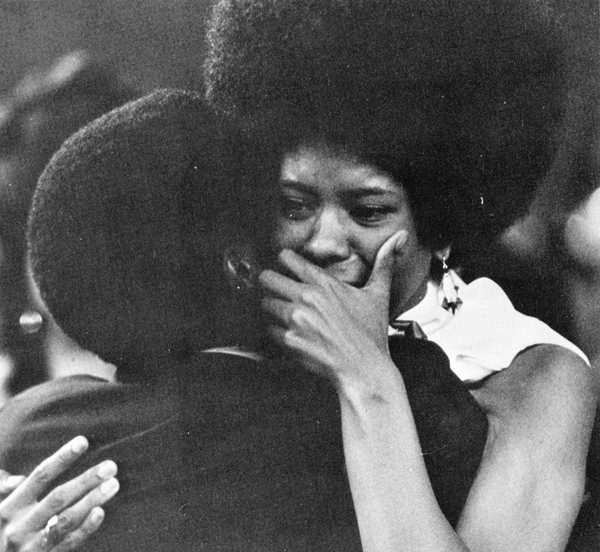
Lynn Eusan makes national news for becoming the first African American homecoming queen at a predominately white university in the South.
-
By the end of the decade, the schools of hospitality and social work were established and several new buildings were built including the University Center, the Science and Research Building 1, and the Cullen College of Engineering building.

Fall Enrollment
24,700 students
1970-1979
Coming into Its Own

The UH Sarah Campbell Blaffer Art Museum founded.
-
Answering the regional demand for high-quality higher education, the University of Houston-Victoria opened in 1973, followed by the University of Houston-Downtown and the University of Houston-Clear Lake in 1974.

UH School of Theatre hosts first annual Houston Shakespeare Festival at Miller Outdoor Theatre, a tradition that continues today.

UH joins the Southwest Conference.
-
UH Football wins the Southwest Conference championship, advances to the Cotton Bowl.

UH Football defeats No. 4 ranked Maryland, 30-21, in the Cotton Bowl.
-
The Texas Legislature establishes the University of Houston System, naming UH the System’s flagship university.
-
UH becomes the home of Arte Público Press, the nation’s premier publisher of U.S. Hispanic literature.
-
Continuing its building boom, UH opened over 20 facilities in the 1970s, including Moody Towers, Charles F. McElhinney Hall, the Fine Arts Building, and the Optometry Building.
The College of Arts and Sciences also reorganized into three colleges: social sciences, natural sciences and mathematics, and humanities and fine arts.

Fall Enrollment
28,400 students
1980-1989
Rising up the Ranks

The prolific Phi Slama Jama basketball team takes UH to three-straight NCAA Final Fours, competing in back-to-back national championship games in 1983 and 1984.

UH alum Carl Lewis wins first of 10 Olympic medals at the Olympic Games in Los Angeles.

UH’s Paul Chu achieves stable superconductivity at 93K, a major achievement in modern science.
-
Created by the Texas Legislature in June 1987 to build on Dr. C. W. Paul Chu and his colleagues’ breakthrough in high-temperature superconductivity, the Texas Center for Superconductivity at UH (TcSUH) is established to advance multidisciplinary research, education and technology transfer in the field, growing into a leading university-based superconductivity research center.

UH quarterback Andre Ware becomes the first African American quarterback to win the Heisman Trophy.
-
By 1989, research funding had nearly tripled to over $40 million, and numerous programs were nationally ranked.

Fall Enrollment
32,300 students
1990-1999
Achieving National Prominence

Marguerite Ross Barnett becomes UH’s first female and first African American president.

William “Bill” Sherrill establishes the Center for Entrepreneurship & Innovation at UH, laying the foundation for what would become the nationally renowned Cyvia and Melvyn Wolff Center for Entrepreneurship.

The UH Space Vacuum Epitaxy Center’s Wake Shield Facility makes its debut aboard Space Shuttle Discovery, becoming the first Texas payload to fly on a shuttle. The first of three missions, it grows five high-purity semiconductor films while suspended from the shuttle’s robotic arm, demonstrating the feasibility of using space’s ultra-high vacuum for advanced materials research.
-
UH joins Conference USA.

The administrations of the UH System and University of Houston were combined under a single chief executive officer, with the dual title of Chancellor of the UH System and President of the University of Houston. Arthur K. Smith becomes the first individual to hold the combined position.

During this decade, academic prestige grew and the Honors Program was elevated to a college in 1993. The following year, U.S. News & World Report ranked the health law program number one nationally, and UH was elevated to national research university status by the Carnegie Foundation.

Fall Enrollment
32,700 students
2000-2009
Weathering Storms: Driving to Excellence
-
UH surpassed $53 million in research funding and a new college for liberal arts and social sciences was established.

UH earns national recognition for several academic programs, including its No. 1-ranked health law program, No. 2-ranked creative writing program and No. 7-ranked Institute for Intellectual Property and Information Law.
-
UH demonstrates remarkable resilience after Tropical Storm Allison causes catastrophic flooding, damaging 90 buildings across campus. The University closes for one week before reopening for summer classes on June 18.

The Campus Recreation and Wellness Center opens, featuring a 70-meter competitive natatorium. That same year, Cougar divers Yulia Pakhalina and Anastasia Pozdniakova began training in the state-of-the-art natatorium, before winning six Olympic medals in the decade.

Committed to service, UH extended vital relief to Hurricane Katrina evacuees, including displaced students.
-
A School of Nursing is approved at the University of Houston-Victoria, laying the foundation for what would become the University of Houston's College of Nursing.

Renu Khator starts her tenure as the eighth UH System chancellor and 13th University of Houston president, becoming the first female chancellor of a Texas higher education system and the first Indian immigrant to lead a comprehensive research university.

President Renu Khator declared a bold plan to gain Tier One research status, beginning an unprecedented era of transformation.
-
UH alumnus Adrees Latif won Pulitzer Prize for Breaking News Photography.
-
The Texas Medical Center welcomes UH as a member institution to strengthen collaboration in education, research, planning and policy development to support the City of Houston.

UH acquires a 35-acre property south of the main campus and establishes Energy Research Park, creating a hub for academic programs, energy research and industry collaboration

Fall Enrollment
37,000 students
2010-2019
Rising to Tier One
-
UH is granted the highest designation for research by the Carnegie Foundation, elevating it to Tier One status.
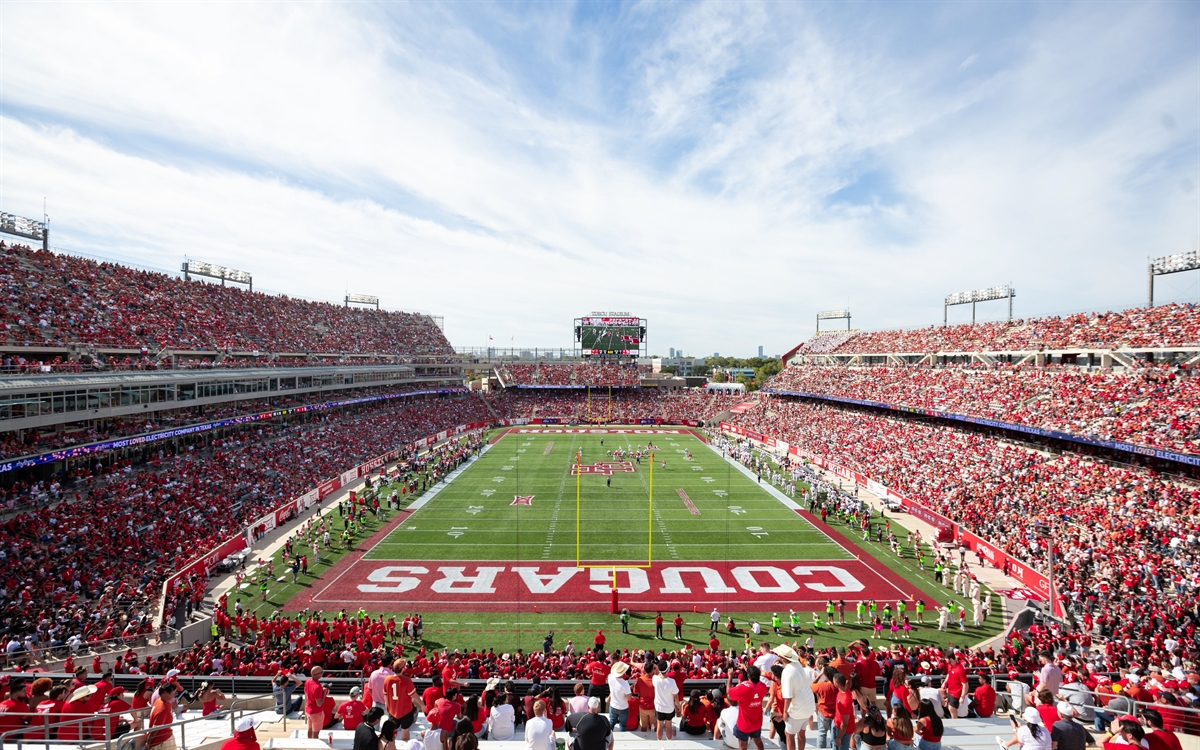
UH opens the 40,000-seat TDECU Stadium on the site of the former Robertson Stadium, ushering in a new era for Cougar Football.
-
UH celebrates the grand opening and full completion of the transformed and expanded UH Student Center (formerly the University Center).
-
The School of Nursing transitions from the University of Houston-Victoria to the University of Houston, becoming part of UH's growing health sciences portfolio.
-
UH establishes the Hobby School of Public Affairs, named in honor of former Texas Lt. Gov. Bill Hobby, building on the University’s Center for Public Policy, established in 1981.
-
UH launches $1 billion capital fundraising campaign, the most ambitious in the institution’s 90-year history, and the first public university billion-dollar campaign in Houston.
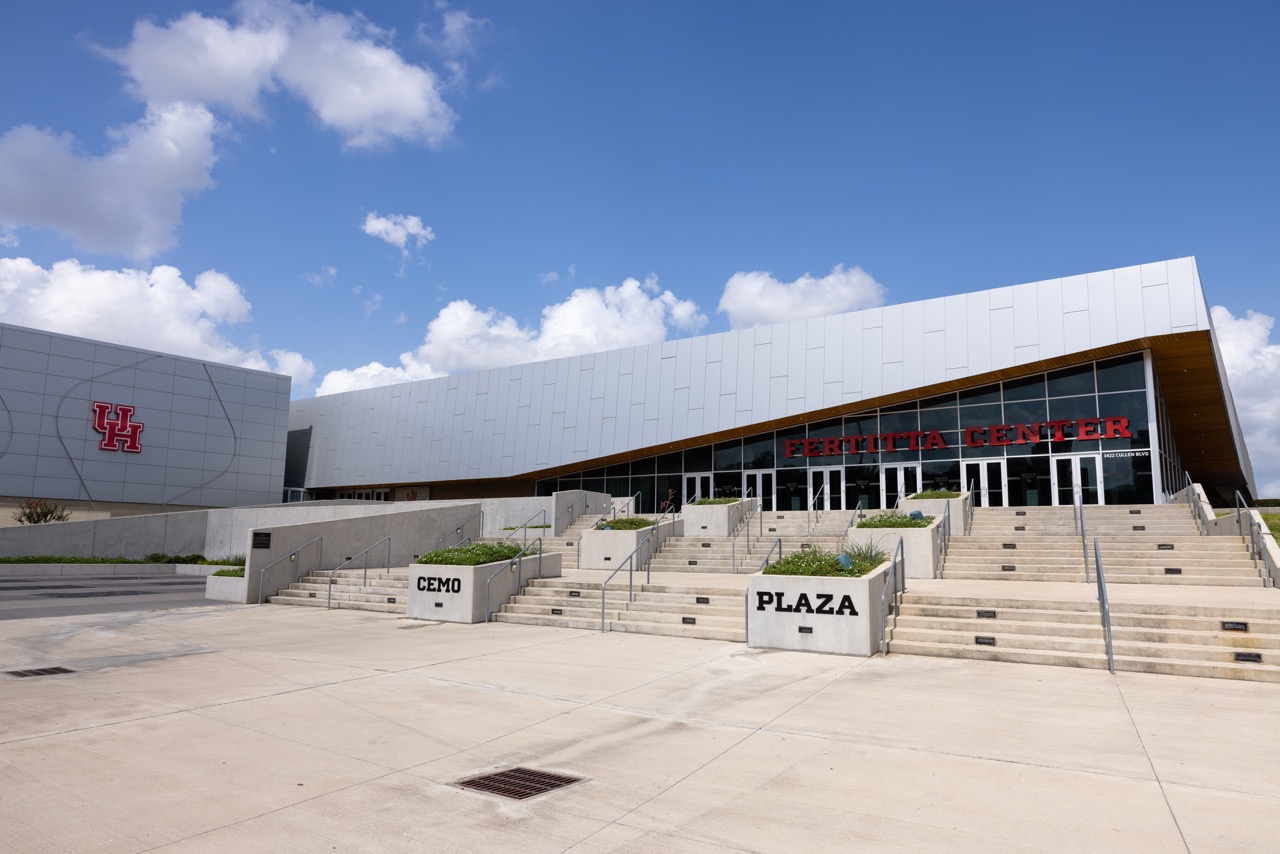
UH opens the newly renovated Fertitta Center arena, complementing its Guy V. Lewis Development Facility to complete a world-class basketball infrastructure. The new home fuels a historic season ending in a 2019 NCAA Sweet 16 run for Men’s Basketball.
-
During this era, graduation rates soared and enrollment increased by nearly 20%. A massive construction boom revitalized the new campus, adding 22 new facilities, including modern residence and dining halls, cutting-edge classrooms, and advanced research facilities.

Fall Enrollment
46,100 students
2020-2027
Excelsior

The UH College of Medicine is established to address critical primary care shortages and to improve health outcomes in Houston and across Texas. (In 2022, it is renamed the Tilman J. Fertitta Family College of Medicine following a historic gift.)
-
UH alumnus Jericho Brown won the 2020 Pulitzer Prize for Poetry.

UH Men’s Basketball established itself among the nation’s elite programs, reaching the NCAA Final Four in 2021; the Elite Eight in 2022; the Sweet Sixteen in 2023, 2024 and 2026; and the NCAA National Championship Game in 2025.
-
The UH College of Medicine becomes the 63rd member institution of the Texas Medical Center, strengthening its role in Houston's world-renowned health care and research ecosystem.

UH officially joins the Big 12 Conference, marking a new era for Houston Cougar Athletics.

Cristina Rivera Garza, an M.D. Anderson Distinguished Professor in Hispanic Studies at UH, won the 2024 Pulitzer Prize for Memoir or Autobiography.

UH opens its Aerospace Innovation in Mechanics and Materials (AIM²) Laboratory, supporting NASA-aligned research and education in advanced aerospace materials, structures and technologies.

The UH Wolff Center for Entrepreneurship is ranked the No. 1 undergraduate entrepreneurship program in the nation by The Princeton Review for the seventh consecutive year.

UH named a Top 100 College for future leaders by TIME Magazine.
-
UH earns Carnegie’s new “Opportunity College & University – Higher Access, Higher Earnings” designation while retaining its longstanding “Very High Research Activity” (R1) classification, which UH has held since 2011. UH is one of only 21 institutions nationwide to hold both designations, recognizing its combination of high-level research activity, student access and socioeconomic mobility.
-
UH's research enterprise reaches $276 million in annual expenditures, reflecting a decade of rapid growth and expanding national research prominence.

UH rises to No. 43 among public universities and No. 78 among research universities in Forbes’ 2026 America’s Top Colleges rankings, reflecting the University’s growing national prominence, commitment to student success, affordability and strong career outcomes.

UH researchers at the Texas Center for Superconductivity set a new record for superconductivity at ambient pressure, achieving a transition temperature of 151 K — the highest ever recorded under ambient pressure — potentially paving the way for advances in power grids, medical technologies and energy systems by enabling electricity to flow without resistance.

UH welcomes nearly 7,100 freshmen, surpassing 7,000 for the first time in university history and marking a third consecutive year of record freshman enrollment.
-
UH rises to No. 67 among public universities nationwide in the 2027 U.S. News & World Report Best Colleges rankings, continuing its progress toward its goal of becoming a Top 50 public university.
-
Faculty and students consistently earned top national honors in the 2020s, including the Gates-Cambridge Scholarship, Pulitzer Prize, and MacArthur and Guggenheim Fellowships. Over 20 new facilities and renovations supported UH’s growth and modernized the campus. In 2027, UH will celebrate its centennial anniversary and debut a transformative renovation to the historic core of campus.