Data Analytics for the Process Industries
-
Pricing
Individual Badge Price: $900 each | Belt Bundles: $2,500
-
Schedule
Exploratory Data Badge Starts: TBD |Dynamic Models Badge Ends: TBD
TUES & THURS | 6:00pm - 8:30pm
Executive Summary
We have all heard terms like data analytics, AI, machine learning, deep learning, or similar. What do they all mean? How can an industry professional master them? Data Analytics for the Process Industries is here to demystify the field for industry professionals and students.
Designed and presented by leaders from industry and accomplished faculty from the University of Houston, it answers the question: “What does data analytics mean for the process industries?” It builds practical skills, bridging fundamentals with applications. This new program is structured as a series of micro-credentials or “digital badges” that you can immediately add to your online resume. Each badge represents an important data sciences skillset, together with practical examples, designed to equip you to handle current and emerging challenges using advanced data-based decision-making tools and techniques.
Each badge is a 15-hour module, delivered over a 3-week period, and the badges are stackable. The first three badges, which together form the Bronze Belt in Data Analytics for the Process Industries, will be launched in August 2021. Additional belts (silver and gold) are planned.
PROGRAM OVERVIEW
Industry is undergoing significant changes, including repositioning operations to be cost-competitive in a world of low oil prices, while meeting the growing demands of energy, competitiveness and productivity in a sustainable way. This requires working in smarter and more efficient ways. Innovation has always been at the core of the process industries. Many oil refining and chemical companies are already finding ways to implement data sciences solutions and are realizing tangible benefits, including competitive advantages.
As data sciences are playing an increasingly important role in addressing these industry challenges, industry leaders have recognized that there is a workforce shortage in skilled data scientists who understand the process industries. For this reason UH Energy, at the University of Houston, in collaboration with the William A. Brookshire Department of Chemical & Biomolecular Engineering and industry experts, has developed the Data Analytics for the Process Industries Program. Our goal is to equip current and aspiring process industry professionals in data analytics concepts, and to provide hands-on experience with real world examples.
Who should attend?
Data Analytics for the Process Industries has been designed with two distinct groups in mind:
- Professionals already in the process industries and facing daily challenges handling data and making or supporting operational and business decisions. Data Analytics for the Process Industries will enhance your capabilities, and enable deeper insights from the data that you handle every day, creating opportunities for improved efficiencies and more productive and competitive operations.
- Young professionals preparing for a career in the process industries. Data Analytics for the Process Industries provides a unique perspective and a ready to apply practical skillset, giving you a competitive advantage as you enter the professional marketplace.
The industry focus is oil refining, chemicals, petrochemicals & polymers, and other process industries.
Learning Objectives
After successfully completing the Bronze Belt, participants will understand how to extract knowledge from raw data and be skilled at:
- Exploratory data analytics
- Data visualization
- Data processing
- From spreadsheets to toolkits for data analysis
- Programming essentials
- Regression and correlation
- Dynamic models
- Design of experiments
Pricing
INDIVIDUAL BADGE PRICE:
$900
EACHBRONZE OR SILVER BELT BUNDLE (All 3 Badges purchased together):
$2,500
ALL 3Credentialing Overview
The course is offered in 15-hour modules, each over a 3-week period. Digital badges are awarded for each module. For completing each group of 3 Badges, learners earn a Belt. Currently, only the Bronze Belt is available. Belts and Badges are a permanent addition to your skillset and resume.
Bronze Belt
The Bronze Belt starts, in the Exploratory Data Analysis & Data Visualization Badge, by introducing data analytics in the context of engineering, and it presents a range of tools and techniques for data analytics in a very familiar format – spreadsheets. Topics covered include data visualization and presentation, preprocessing data, simple estimation tasks, regressions and correlations; and understanding the limitations of spreadsheets. In the Programming Basics and Solving Practical Problems Badge, we progress to more advanced tools, and introduce arrays and structures, looping and conditionals, functions and scripts, debugging and error handling, and additional ways of visualizing and plotting data. And finally, the Dynamic Models, Design of Experiments, and Classification Badge focuses on dynamic models and design of experiments, and also introduces classification tools and multivariate methods. Some of the process industry applications covered in the Bronze Belt are data visualization and reduction, linear and nonlinear regression for static or dynamic models, and process monitoring and fault detection.


Silver Belt
The Silver Belt provides a deeper dive into data analytics based on multi-variate statistics. This includes principal component analysis, Partial Least Squares (PLS), Total Least Squares (TLS), Support Vector Machines (SVM), Neural Networks (NN), Discriminant Analysis (DA), and simple resampling methods. It also covers applications of these techniques to relevant problems in the process industries.

Gold Belt
The Gold Belt will introduce participants to tools and techniques for Kernel PCA (Principal Component Analysis), Nonlinear PLS (Partial Least Squares), PLS DA (Partial Least Squares Discriminant Analysis) – Resampling Methods (e.g., Bootstrapping). Examples involving both static and dynamic models will be covered.
Instructors

Dr. Mark Darby
Independent Consultant

Dr. Michael Nikolaou
Professor, Chemical and Biomolecular Engineering, University of Houston

Dr. Guan Qin
Associate Professor and Gulf Coast Section of the Society of Petroleum Engineers Endowed College Professor in Petroleum Engineering, Cullen College of Engineering, University of Houston

Dr. Suryanarayanan Radhakrishnan
Clinical Assistant Professor in Decision and Information Sciences, Bauer College of Business, University of Houston

Dr. Dvijesh Shastri
Associate Professor of Computer Science, University of Houston

Dr. Robert Stewart
Director, Allied Geophysical Labs, Hugh Roy and Lillie Cranz Cullen Distinguished University Chair in Exploration Geophysics, Professor of Geophysics, University of Houston
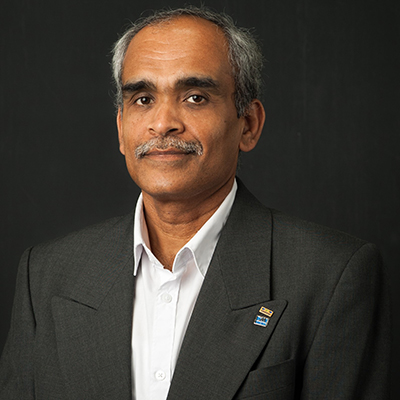
Dr. Kalyan Venugopal
Associate Research Scientist, Department of Energy and Petroleum Engineering, University of Wyoming
Credentialing Program Prerequisites
Either:
- Senior or graduate student in engineering, technology or business with a general understanding of process operations such as conveying, pumping, compressing, mixing, separating, and reacting materials
- Process Industry Professional